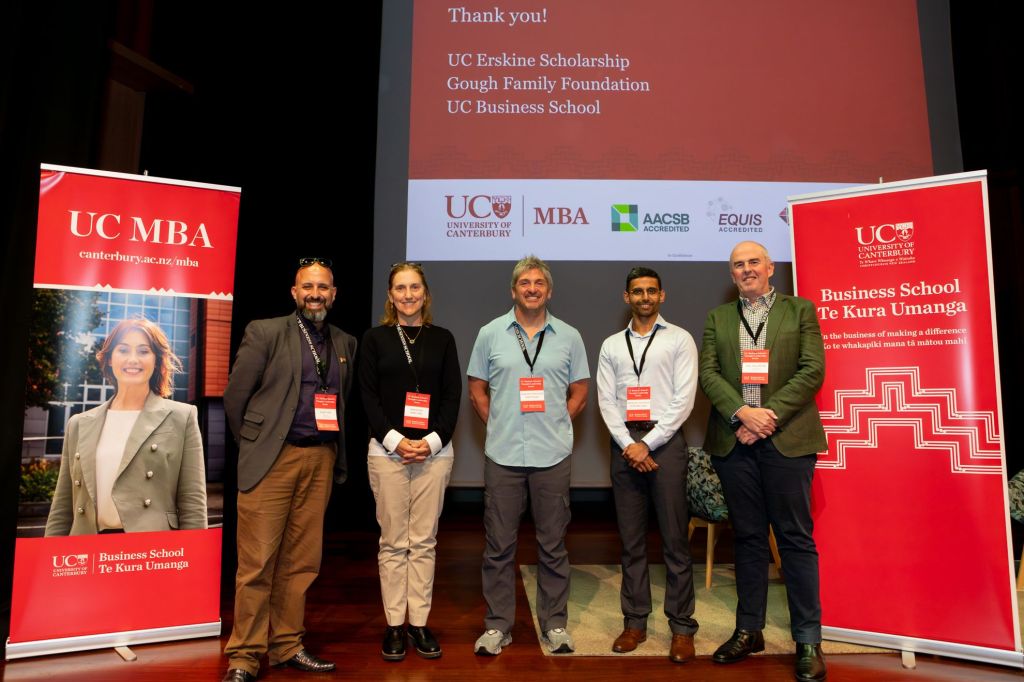
Recently I was asked to discuss the paradox of meritocracy as part of The University of Canterbury Business School’s Thought Leadership Series. For this, I was fortunate to be on a panel with Prof. Mikki Hebl and Associate Prof. Remi Trudel .
I situated my argument on three points:
- Who determines what is merit?
- How do we earn and communicate merit?
- Is all merit the same?
Who determines what is merit?
Sometimes it is argued that Australian First Nations peoples did not build large permanent monuments and therefore could not have constituted complex or organised civilisations. This argument relies heavily on Western assumptions about what civilisation and achievement should look like. Monumental architecture is often associated with controlling or transforming the land, whereas many First Nations cultures developed sophisticated systems of knowledge, governance, and sustainability that emphasised living in balance with Country. In many regions, people moved seasonally and maintained (and continue to maintain) deep, enduring relationships with land that prioritize stewardship and connection rather than permanent physical markers of presence.
How do we earn and communicate merit?
In the book Poof by J. M. Tolcher the author writes “the silence of adults, parents, teachers taught me one thing: that I was less than…”.
People from marginalized, minoritized, or stigmatized groups may grow up internalizing beliefs that they are less capable or less deserving, which can limit what they believe they can achieve. When such beliefs become internalized, they can restrict aspirations and performance. A substantial body of research shows that when girls are repeatedly told they are not good at mathematics or engineering, they are more likely to disengage from these fields or underperform due to social and psychological pressures. This raises an important question: how can individuals achieve and effectively communicate their merit in contexts where structural and social barriers shape both opportunity and recognition?
Is all merit the same?
A participant in one of my studies one said ‘I was told I became a Prefect in school despite being a lesbian and I should act more respectfully’.
Arguably, the student was appointed prefect on the basis of achievement; however, that achievement itself appears to have been qualified. Research in academia suggests that when LGBTQ+ scholars conduct research on LGBTQ+ topics, their work is more likely to be dismissed as personal interest or advocacy rather than recognized as rigorous scholarship. In contrast, when cisgender heterosexual scholars research the same topics, the work is more often perceived as neutral and legitimate. This illustrates how merit is not evaluated in isolation, but is frequently filtered through the social identities a person carries.
So to quote Audre Lorde “For the master’s tools will never dismantle the master’s house. They may allow us temporarily to beat him at his own game, but they will never enable us to bring about genuine change.”
Can the master’s tools allow us to dismantle the master’s house or does believing in that, and in meritocracies, just leave us all as fools?
 Clifford Lewis